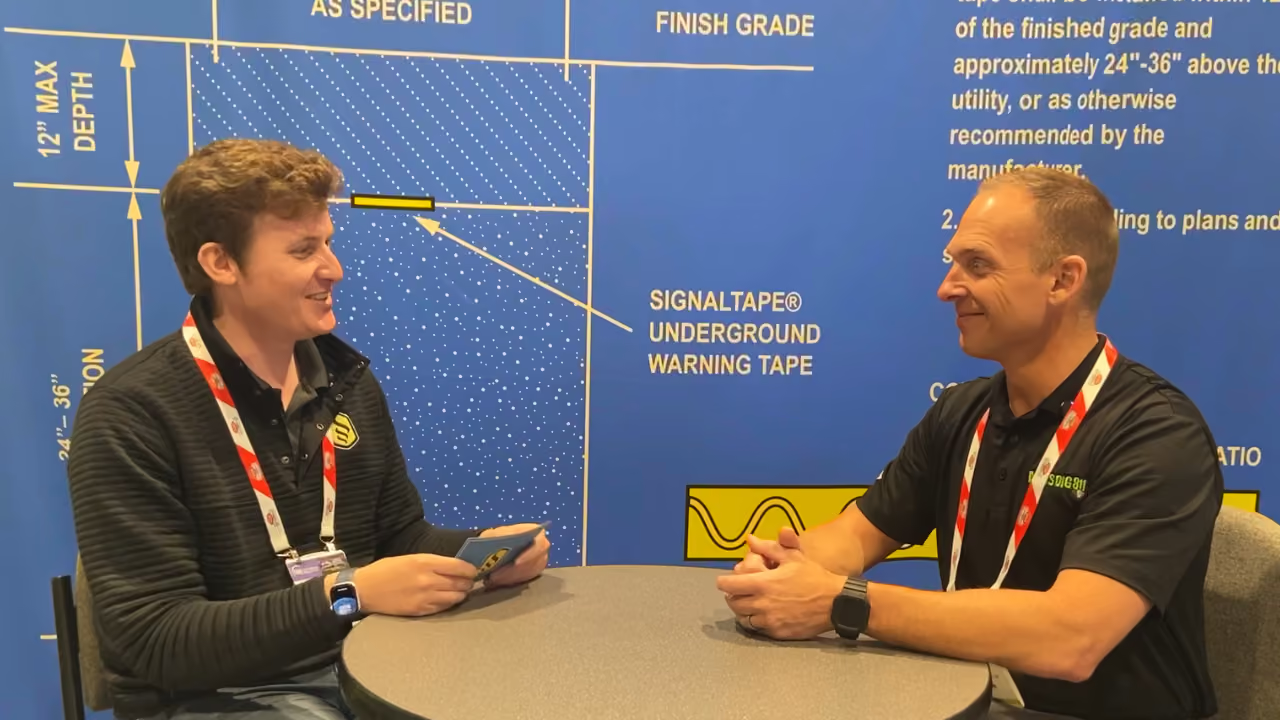
Henry Brophy (Damage Prevention Solutions): “Well, thanks, Neil for dropping by. How’s the show been going for you?”
Neil Fischer (McKim & Creed): “Pretty good. We were part of doing a NULCA certifying class for some locating upstairs, and we finished that up today. So now I get to enjoy the rest of the show.
Henry: “Nice, nice. And I think we should start up the conversation. Just your name and your role and a little bit more about your company, and then we can just jump right in.”
Neil: “Okay. Well, my name is Neil Fisher with McKim & Creed. We're a survey and engineering company. We do a lot of SUE work. We also have just recently gotten into the 811 side. I'm the Florida West Manager - Regional Manager. We cover several different states with what we do, and you know, I've done 811 prior to that and have been in the industry damage prevention industry for 20 years already.”
Henry: “Wow. Wow. And just kind of kicking off just the whole campaign for our show is this whole concept of ‘Preventing Damages by Design’ and so I just kind of wanted to start by saying, you know, where do you kind of see that in your role and your company? Like how did you say that you see that in the day-to-day?”
Neil: “Okay. So, there's different levels of work. There's A, B, and C for the SUE side. Anytime we're getting into level A we have kickoff meetings and damage prevention is definitely in there, then engineering it out is on the risk assessment side.”
Henry: “Okay.”
Neil: “On the 811 side from my experience there, we're a little more limited in that role from, you know, engineering it out of the job because by the time they're involved it's kind of too late. I think where they play the big role is understanding that a design locate is just as important as a dig locate, because that's where they're supposed to be designing, you know, less interaction, less risk to the utilities.”
Henry: “And kind of on that, like how do you see engineering and damage prevention kind of playing together? Do you do you see that at all. Where are we right now?”
Neil: “Definitely more in SUE. I think the locate side of it, the designate side is being held back a little bit from I think there's some trust issues.”
Henry: “Okay.”
Neil: “So, regardless of what the paint on the ground is, I think they're still going with their original plans and stuff could be engineered out of it. You really have to build those relationships and confidences between what's on the ground and what it is. And I've been a part of many conversations where the paint on the ground wasn't accurate and they designed it with that in mind, and then it really screwed up their whole thing. So rather than changing their design, they're just sticking with it because they don't feel necessarily confident that the work was done.”
Henry: “Got it. So you see it was more like a communication problem? Is it an education problem or like where do you kind of see that?”
Neil: “Communicating, and then the education side for the locator, just an understanding that the design work is just as important as the dig work.”
Henry: “Got it, and so kind of looking ahead like in the future, you know, you could change one thing about how projects are designed and executed and you get to wave the wand, how to make it better for damage prevention? How would you what would you start?”
Neil: “Probably on the education side of educating. So there's so many facets in this. So you break it into you have the engineers who have one goal, you have damage or the contractor that has the goal, you have to locators that have a goal, and at the end, if everybody's goal is the damage prevention, you know, understanding that risk, that's where it all comes together, and having more meetings between those three. There are a lot of meetings between locator-contractor, contractor-design contractor-engineers but usually not all three, and sometimes you know, the locate company can be like I've worked here for five years. I know what this site is like. You know, this is going to delay your project by three months to do it this way, and it kind of going to entice them, you know, to do it the other side. I think the facility owners have to take a bigger, bigger role in it and understand that, you know, getting that information out, having the proper prints and updating that.”
Henry: “Right, that’s what I’ve heard.”
Neil: “So they know all of that information. I think if they've got involved in making sure that was all correct, then you also can design better off of that as well.”
Henry: “Well, thanks. I think that's it.”
Neil: “All right.”
Henry: “Well thank you so much.”
Neil: “Yeah.”