
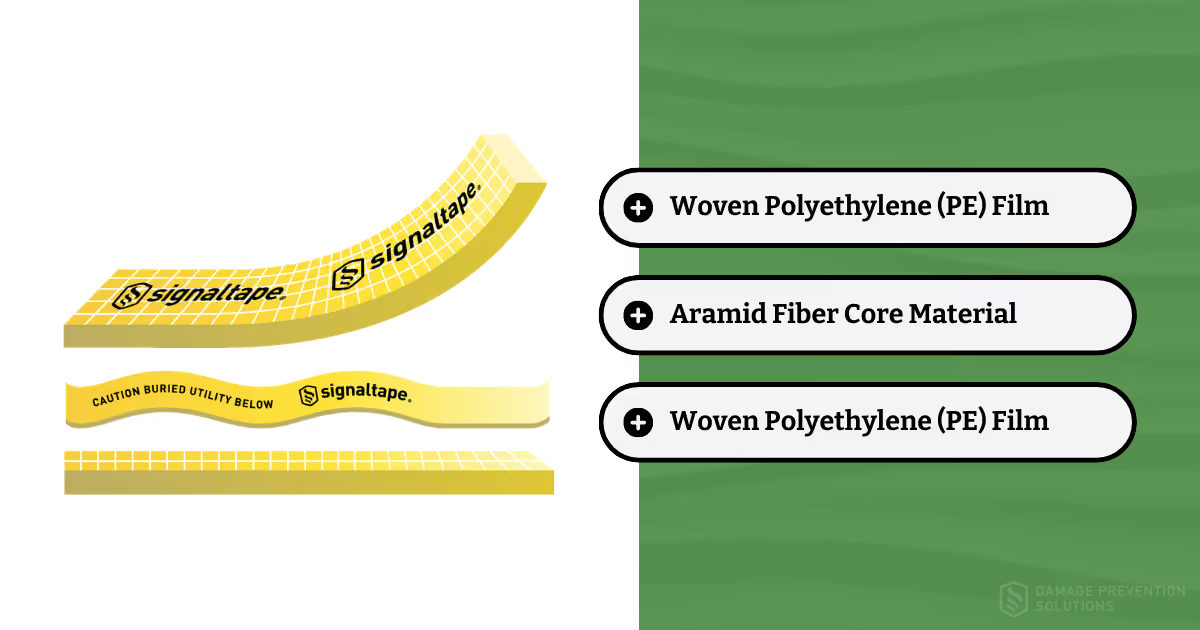
Products for underground utility damage prevention should be engineered with materials selected to perform in the underground environment, not only in laboratory conditions. Each component used in Signaltape® Underground Warning Tape plays a defined role in helping the tape remain visible, identifiable, and functional over time.
The two outer layers of Signaltape® Products are constructed from woven polyethylene (PE) film. With a combined thickness of 11 mil, these two layers resist tearing and stretching better than conventional extruded plastic film.
PE film has excellent resistance to acids, good resistance to alkalis, and is not susceptible to mildew; all of which are important in the buried soil environment. The material is also hydrophobic; this helps deter mud and dirt from adhering to the surface of the tape.
The woven core material is a critical component to the function of Signaltape® Underground Warning Tape. This material was selected for its high tensile strength (3,000 lbf when tested to ASTM D6775 and 31,500+ PSI when tested to ASTM D882), however strength alone is not the only purpose of using this material.
The core material is inlaid in a patented sine wave configuration. This design provides a combination of tensile strength and controlled slack. When encountered by excavator equipment, the core material is caught by the excavator bucket and pulled toward the surface rather than shearing underground.
This formation also allows the tape to perform regardless of the angle of approach. Performance is not compromised when the tape is contacted from 90 degrees rather than 180 degrees (which is most often demonstrated).
Underground warning tape is often treated as a commodity product, but the weight and environment of soil are not the most forgiving; material selection affects:
Failures of underground marking and warning tapes are often related to the materials used, such as thin material that tears or foil that loses continuity. Selecting engineered materials designed for underground conditions can help reduce those risks.