
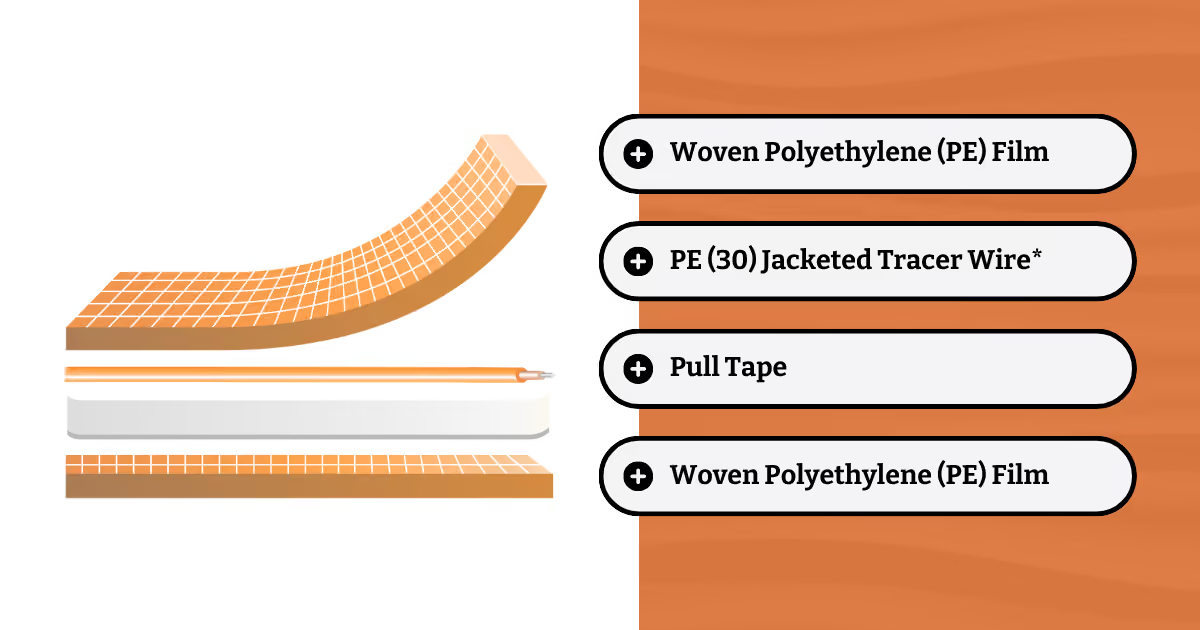
Unlike marking tape placed above or alongside a utility, Channeltape™ Utility Identification Sleeve is constructed to surround a fiber line. Two layers of woven film form an open center channel through which the line can be installed, providing discrete visibility during temporary above-ground staging and continued identification if the line is later buried with the sleeve.
Channeltape™ Products are made with two layers of woven polyethylene film. The material resists tearing and stretching better than conventional extruded plastic, while providing a visible and printable exterior for identifying the line inside.
The two film layers have a combined thickness of 11 mil. They also offer excellent resistance to acids, good resistance to alkalis, and resistance to deterioration caused by mildew and aging.
The two layers of film are configured to create a hollow center channel. This channel distinguishes Channeltape™ Utility Identification Sleeve from conventional caution or marking tapes because the fiber line remains within the sleeve rather than resting beneath it.
Once installed, the sleeve remains around the line to provide identification during temporary above-ground staging. It can also remain in place when the line is permanently buried.
A 1/4-inch pull tape comes preloaded inside the open center channel. The pull tape is used to draw the new fiber line through the sleeve, simplifying installation without requiring a separate pulling component to be inserted first.
The pull tape has a break strength of 500 lb. and remains contained within the channel until installation.
Channeltape™ Products are optionally available with an embedded 14 AWG copper-clad steel tracer wire with a PE (30) jacket. When included, the tracer wire provides a conductive path that can be used with compatible locating equipment after burial.
Without the optional tracer wire, Channeltape™ Products are nondetectable and must be used with another appropriate locating method.
Each part of Channeltape™ Utility Identification Sleeve serves a separate role:
Together, these components provide a practical method of identifying fiber during temporary above-ground installation and, when appropriate, after permanent burial.