
Products used to identify buried utilities in professional construction environments must remain visible and support future locating efforts after installation. Tracetape® Detectable Marking Tape combines durable film with a conductive element to provide visual utility identification and electronic detectability in one product.
Each component serves a functional role in addressing potential points of failure, including tearing, deterioration, and loss of detectability.
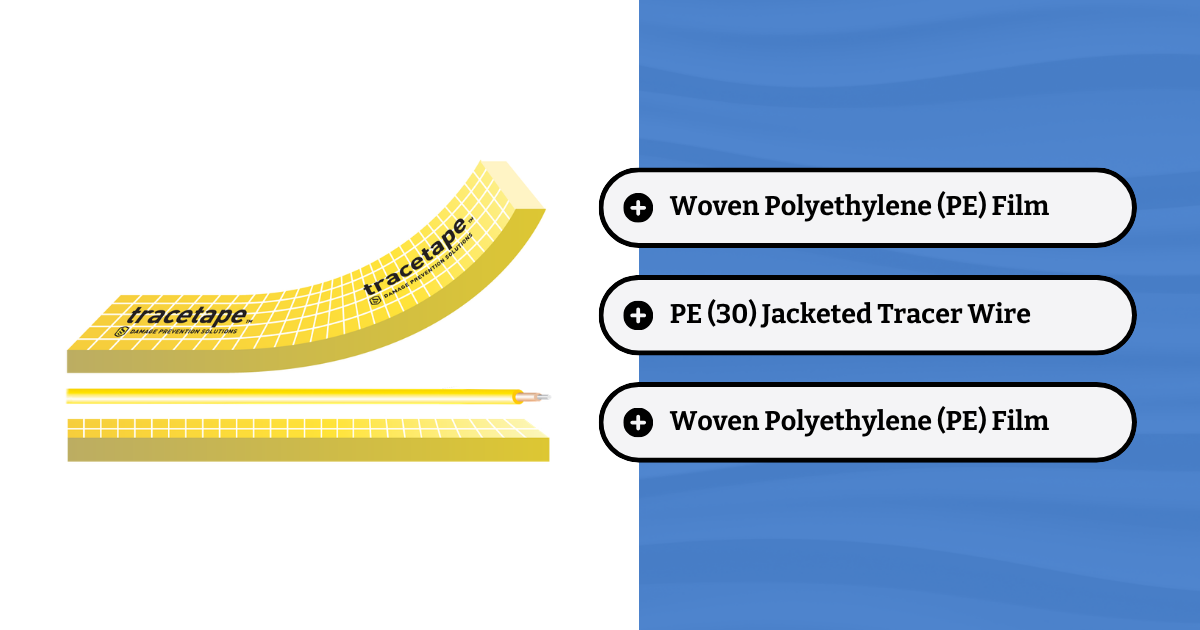
The outer layers of Tracetape® Products are made of woven polyethylene (PE) film. The two layers have a combined thickness of 11 mil and resist tearing and stretching better than conventional extruded plastic film used in consumer-grade caution tapes.
The woven construction is a functional material choice rather than a cosmetic one. Marking tape that tears or stretches excessively during handling or installation may no longer provide consistent identification along the utility route. The woven film helps the tape maintain its form while allowing it to lay flat during open-trench installation.
Polyethylene also offers excellent resistance to acids, good resistance to alkalis, and resistance to deterioration caused by mildew and aging. These properties support continued identification in buried soil conditions.
The exterior film provides the visible, color-coded surface on which standard or custom utility legends are printed. This allows the tape to communicate the type of utility present after being exposed during future construction.
A PE (30) jacketed tracer wire is embedded between the two layers of woven film. This wire provides the conductive path needed to apply a signal and locate the approximate route of the buried utility using compatible locating equipment.
Some locatable tapes rely on a thin foil layer for conductivity. If the foil deteriorates or loses continuity, its ability to carry a locating signal can be compromised. Tracetape® Detectable Marking Tape instead incorporates a dedicated copper-clad steel (CCS) tracer wire for electronic locating.
Embedding the wire within the film also keeps the locating component and printed utility identification together as one product. The tape identifies what is buried while the tracer wire supports locating from the surface.
Industrial-grade marking tape is designed around the ways identification and detectability can become ineffective in professional construction environments. The components of Tracetape® Detectable Marking Tape address these concerns through:
No single component defines the product’s performance. The film and tracer wire serve different but complementary roles within a broader utility identification and damage prevention strategy. Bringing these components together provides a consistent method of marking and locating utilities installed by open-trench methods.